

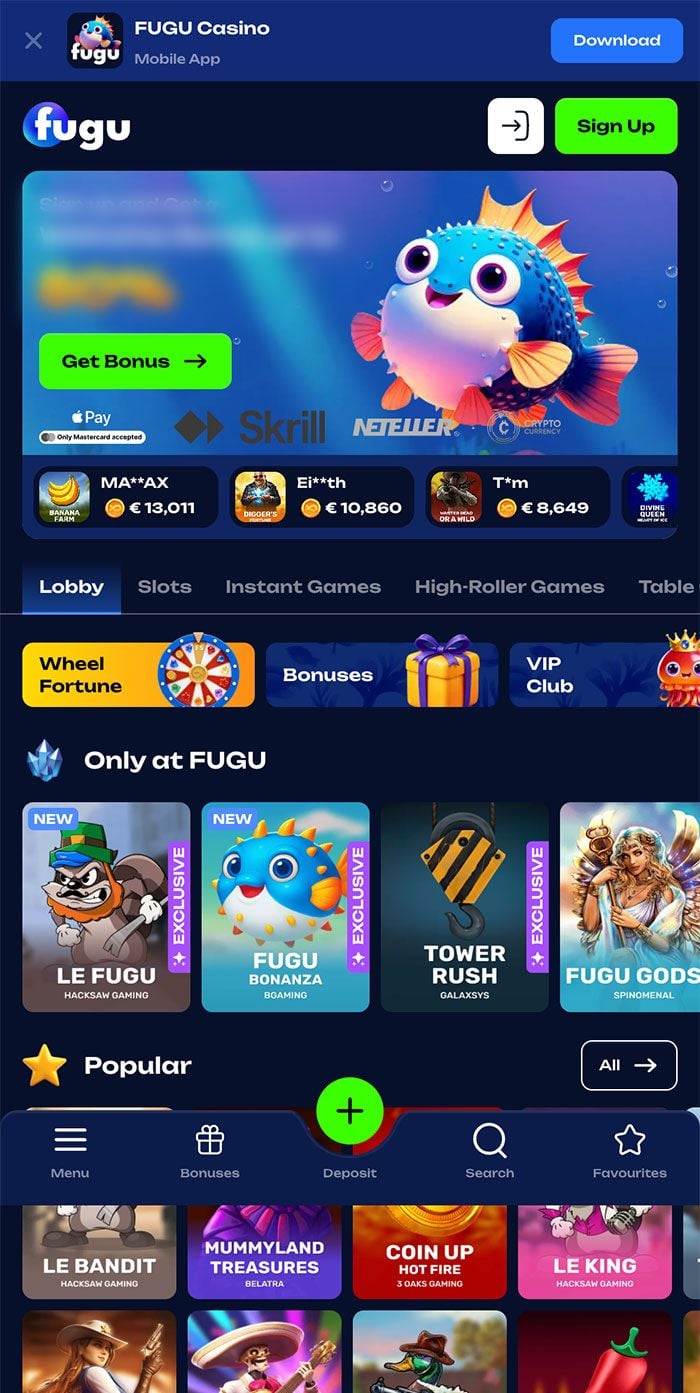
Welcome the elite world of online gaming, where the road to VIP status is both fulfilling and exhilarating https://fugucasinoo.ca/. At Fugu Casino, we believe that every Canadian player merits the height of online casino luxury, and we have crafted a route that makes obtaining elite status not just a goal, but a concrete reality from the moment you sign up. Our platform provides a distinctive blend of exciting games, ample bonuses, and a layered loyalty program specially crafted for our Canadian audience. By understanding what our players value most—security, fairness, and remarkable rewards—we’ve established an environment where your play is continually recognized and elevated. This article will guide you through the seamless process of joining Fugu Casino and how, by engaging with our offerings, you can rapidly ascend to our coveted VIP ranks, accessing a suite of benefits meant to improve your gaming experience deeply.
The attraction of VIP Membership at Fugu Casino
Achieving VIP level in an online casino signifies more than just a title; it signifies entry into a realm of bespoke service, increased rewards, and privileges that transform the standard gaming experience. In Fugu Casino, our VIP scheme rests on a foundation of gratitude for our most loyal players in Canada. The appeal resides in the concrete and unique benefits that are associated with each level. Picture having access to a personal account manager who understands your likes and is dedicated to addressing your demands, making sure your stay with us is smooth and pleasurable. Additionally, elite members receive significantly higher withdrawal limits, expedited processing for their payments, and unique bonus deals with better conditions. These advantages are not merely ordinary benefits; they are designed to deliver genuine value, eliminating obstacles and maximizing the thrill of every win. We organize our elite tiers to reward both consistency and enthusiasm, so that your experience with us is met with ever more thrilling and worthwhile rewards.
The Straight Route to Premium Perks
Joining Fugu Casino is your initial and most critical step on the direct path to gaining elite VIP status in Canada. The procedure is simple, safe, and is completed in minutes, setting you on a course toward better gaming. Once registered, your journey toward VIP recognition commences instantly. We have laid out a clear, practical roadmap for our Canadian players to follow, making sure that the way to the top tiers is both attainable and rewarding. Our program is structured to recognize and reward your activity, meaning every round, stake, and session you participate in contributes to your progress. We steer clear of unclear point systems; on the contrary, we offer clear tracking so you are always aware how close you are to the following level of advantages. This direct path is not shrouded in secrecy but is an clear welcome to enjoy the top we have to provide.
- Complete your registration with thorough verification for a protected account setup.
- Place your first funding to activate your account status and begin earning rewards points.
- Explore our extensive game selection and engage regularly; regular activity is key to moving up.
- Join offers and contests, which often grant bonus loyalty points.
- Reach out to our assistance team to find out about your VIP advancement and upcoming tier benefits.
Maximizing Your Path to VIP Status
Speeding up your path to VIP status at Fugu Casino entails strategic participation with our platform. While consistent play is key, understanding how to leverage our offerings can significantly enhance your progress. First and foremost, we encourage you to fully discover our diverse game portfolio. Playing a variety of games, especially those from our featured or new sections, can sometimes offer additional loyalty points. Secondly, never overlook our promotions page. We regularly organize special campaigns that offer bonus loyalty points or host tournaments where performance directly boosts your standing. Another key strategy is to opt-in for all communications, ensuring you never overlook a time-limited opportunity to earn extra points. We also suggest setting a comfortable budget that allows for sustained engagement, as longevity and regularity are highly prized in our loyalty algorithm. By following these focused approaches, you can efficiently move through the tiers, making your ascent to VIP status both rewarding and swift.
- Vary your gameplay across slots, table games, and live dealer options.
- Diligently participate in all available promotions and time-sensitive tournaments.
- Maintain regular activity on your account to demonstrate consistent engagement.
- Use our deposit methods that may be linked to special loyalty point multipliers.
- Engage with our support and VIP team to stay informed about progression opportunities.
Special Perks reserved for our valued Canadian top players
As you move up the elite tiers at Fugu Casino, a world of exclusive benefits unveils, each tier providing more sophisticated and worthwhile rewards than the last. For Canadian VIP players, these perks are designed with a deep understanding of what improves an internet casino experience. At the initial levels, you will receive weekly reload bonuses and cashback offers, providing a fallback and extra playtime. As you move higher, the benefits become noticeably more tailored and lavish. High-level members get invites to special competitions with large prize pools, birthday rewards personalized for their preferences, and even high-end gift experiences. A highly sought-after advantage is the tailored payout procedure, where maximums are raised and requests get priority for nearly instant payout. We also offer special event access, such as previews of new games or invitations to live events, building a community atmosphere and exclusiveness. These perks are our way of saying thank you for your loyalty and making sure your stay at Fugu Casino is absolutely remarkable.
Common Questions for Future VIPs
We recognize that chasing VIP status comes with questions. Here, we address some of the most frequent inquiries from our Canadian players to deliver understanding and confidence as you start this fulfilling journey.
Understanding the VIP Tiers and Requirements
Our VIP program is structured into multiple tiers, each with its own collection of benefits and points requirements. Advancement is tied to collecting loyalty points, which are gained through real-money wagering.
The Way Loyalty Points Are Computed
Loyalty points are typically credited for every real-money bet you place. The exact rate can differ a bit based on the game type, but our system is designed to be generous and transparent. You can constantly see your current point balance and progress toward the next tier right within your account dashboard.
Benefits and Perks Specific to Canadian Players
We adapt many of our VIP benefits to match the tastes and needs of our Canadian audience. This includes delivering customer support in your selected language, offering bonuses in Canadian dollars to avoid confusion, and guaranteeing all payment methods widely used in Canada are completely accessible for VIP transactions, like enhanced limits for Interac and other domestic options.